
What do you breathe in your workplace? The technology that can help
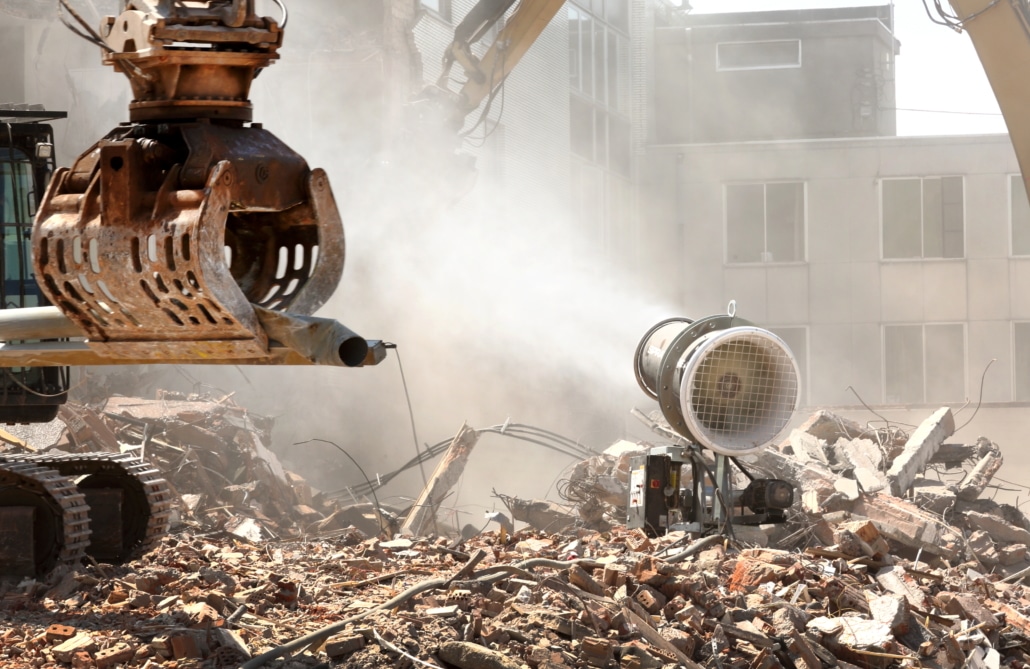
In sectors such as construction and other industrial sectors, exposure to dust particles is a constant, often invisible risk that can be very dangerous for workers.
In fact, breathing construction dust for a long time can lead to illnesses such as asthma, silicosis, chronic respiratory problems and, in more serious cases, even lung cancer.
The dust particles generated by demolitions can enter the respiratory system and accumulate in the lungs over time.
Furthermore, the effects not only affect the workers on the construction site, but can also have detrimental effects on those nearby.
Therefore, it is essential to take preventive measures to protect health, using dust control systems and appropriate protective equipment.
What are the dangers of breathing construction dust?
When we talk about dust on the construction site, we're not just referring to the annoying, visible clouds that arise when cutting or sanding materials. Much smaller dust particles can also be generated, which can penetrate deep into our lungs.
While it's true that not all particle sizes have the same impact, long-term exposure can cause serious respiratory illnesses that can become chronic over time.
Immediate and long-term health effects
Breathing construction dust can cause immediate effects such as coughing, throat irritation, red eyes, and difficulty breathing. However, the most serious problems are related to constant and prolonged exposure.
Continuous inhalation of fine particles can cause diseases such as silicosis, a chronic lung condition caused by exposure to silica dust that can be fatal if not detected early. The most common symptoms are difficulty breathing, extreme fatigue, and weight loss.
Other risks from dust inhalation
Breathing dust in ballast stockpiles where there is a high presence of silica causes the particles to travel through the lungs and reach the alveoli, where they become trapped.
Over time, these particles can cause chronic inflammation, pulmonary fibrosis, and even lung cancer. But they can also contribute to other conditions such as occupational asthma or allergic rhinitis.
What is the most dangerous type of dust on construction sites?
There are some dust particles that, due to their composition, size, and the ease with which they penetrate the lungs, are considered especially dangerous.
Asbestos: an invisible enemy
Asbestos is a mineral that was commonly used in construction materials until it was discovered to be extremely toxic. Long-term exposure to asbestos can cause serious illnesses such as mesothelioma, a type of lung cancer, or asbestosis, a chronic lung disease.
Silica: the most common and deadly dust
Breathing cement dust can also be very dangerous, as this material contains silica dust from quartz, cristobalite, or tridymite. It is also present in stoneware, brick, and stone.
When inhaled, it can cause conditions such as silicosis, a disease that seriously affects the lungs and can be fatal if not treated properly.
Wood dust: a silent threat
Wood dust is another type of dust present at many construction sites. Although it may seem less dangerous, it can reach the lungs and cause long-term respiratory problems.
But it can also cause skin and eye irritation and, in some cases, can even trigger allergies or occupational asthma. In addition, it can be flammable when it accumulates in the air or on surfaces.
How to prevent the risks of breathing dust on the construction site?
To reduce dust exposure and protect workers' health, effective risk prevention is essential. Some of the most effective measures in this regard are the following:
Dust management by suction
Using extraction systems on construction tools and machinery captures dust particles as they arise, preventing them from becoming airborne. These systems are essential for jobs such as cutting concrete, drilling walls, or sanding surfaces.
Wet work
By using water during processes such as cutting or sanding, the amount of dust released is reduced, helping to protect worker health while improving visibility in the workplace.
Use of personal protective equipment (PPE)
To protect workers from inhaling dust, it is essential that they have the appropriate PPE. Masks are essential for filtering airborne particles and preventing them from reaching the lungs.
In addition, it is advisable to wear protective clothing to prevent dust from accumulating on clothing and protective eyewear to protect your eyes from irritation.
Misting systems for dust control
The systems disperse micro-droplets of water that trap dust particles in the air, causing them to fall to the ground and preventing them from remaining suspended. Thanks to their ability to cover large areas and their design, they provide a cleaner and safer work environment.
Training in risk prevention
Training is key to raising worker awareness about dust risks and how to prevent them, helping operators understand the dangers of dust on the construction site and use tools safely to reduce exposure.
Protect your team and improve productivity with state-of-the-art machinery!
At Anzeve , we understand the importance of workplace safety in preventing the risks associated with inhaling construction dust . That's why our goal is to provide comprehensive solutions that help companies create safer and more efficient work environments.
We offer state-of-the-art machinery, such as Spraystream misting systems, which effectively control airborne dust. These systems protect worker health and significantly improve productivity.
We also offer specialized training in the use of these technologies and in the implementation of safety measures to reduce the risks of dust exposure. Your safety is our top priority!
28/05/2025

